Where tk999 Might Go Next: Speculation, Clearly Labelled
Nobody can predict what an online platform will look like in five years, and anyone who claims otherwise is selling certainty they do not have. The useful exercise is different: map the plausible directions a service like tk999 could take for Bangladeshi users, label each one as speculation, and ask what would have to be true for it to happen. That is what this column attempts — no forecasts dressed as facts, just structured thinking about where things might drift.
To be clear about the starting point: tk999 is described on its own site as a trusted online betting platform aimed at Bangladesh, with registration and a downloadable app. Everything below builds on that public description. Nothing here is a promise from the operator, a leaked roadmap, or a report from inside the company.
Scenario One: The App Becomes the Product, Not the Wrapper
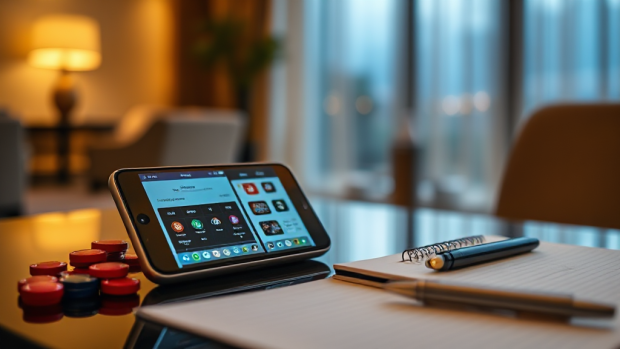
Most mobile betting services today treat the app as a doorway to the same website. A plausible future, and this is speculation, is that the app itself becomes the primary experience — faster load times, offline-friendly account views, and notifications that matter to the user rather than the marketing team.
What would that look like in practice? Possibly a home screen that remembers what a user last checked, a wallet view that updates without a full refresh, and support conversations that live inside the app instead of bouncing to email. None of this is exotic technology; it is a matter of priorities.
Why this direction is plausible
Bangladesh is a mobile-first market. When most users arrive on a phone, the phone becomes the product. The app, not the desktop site, would set the pace of improvement. That shift tends to happen quietly, one release at a time, rather than through a single announcement.
Scenario Two: Payments Get Boring, and That Is the Point
The most transformative change for any betting platform in Bangladesh would not be a new game or a new market. It would be payments that simply work — predictable deposits, withdrawals that arrive when promised, and clearer records the user can check without contacting support.
Speculatively, a platform like tk999 could move toward fewer payment steps, better status visibility, and stronger verification at the front door so that later steps run smoother. Frictionless payments are a trust feature, not a convenience feature. Users forgive a lot, but they do not forgive uncertainty about their own money.
What would have to be true? Local payment rails would need to stay stable, the operator would need to invest in reconciliation and support staffing, and users would need to accept that stronger identity checks are part of the deal rather than an obstacle.
Scenario Three: A More Careful Relationship With the User
Here is a less exciting but arguably more likely direction: platforms in this category gradually compete on how responsibly they treat people, not only on what they offer. That could mean clearer activity summaries, easier self-set limits, and messaging that does not push users toward more spending.
This is speculation, and it is worth being honest about why. Responsible-design features cost money and can reduce short-term activity. A platform adopts them when regulation nudges it, when user trust becomes a differentiator, or when the cost of poor outcomes becomes too visible to ignore.
The trade-off nobody enjoys discussing
Every added check is a small barrier. A user who wants to deposit quickly may find verification annoying. The plausible middle path is not fewer checks but better-timed ones — verification that happens once, clearly, rather than repeatedly at the worst moments. Whether tk999 moves in that direction is unknown; it is simply a direction worth watching.
Scenario Four: Localization Goes Deeper Than Language
Many platforms translate their interface into Bengali and call it localization. A deeper version, still speculative, would adapt the whole experience: support hours that match local routines, payment methods that match local habits, and content that reflects the sports and events Bangladeshi users actually follow.
This matters more than it sounds. A platform that feels locally built earns patience when something goes wrong. A platform that feels imported earns suspicion. Localization is measured in trust, not in translated buttons.
For a service like tk999, the realistic version of this scenario is incremental: better Bengali copy, faster local support, and fewer moments where a user has to guess what a button does. Grand redesigns are less likely than a hundred small fixes.
What Would Have to Be True — and What This Column Cannot Know
Each scenario above rests on assumptions. The app-first scenario assumes continued smartphone growth and stable app distribution. The payments scenario assumes a supportive local environment and real investment in back-office operations. The responsible-design scenario assumes either regulatory pressure or a genuine commercial case for trust. The localization scenario assumes the operator sees Bangladesh as a long-term market rather than a short-term one.
It is also worth naming what this column cannot know. We do not know tk999’s internal plans, its funding, its compliance posture, or how it weighs growth against caution. Public descriptions of a platform tell you what it is today; they do not tell you what it will become.
There is a practical takeaway for readers, though. When you evaluate any platform — including this one — look for evidence rather than promises. Does registration explain what is required before you commit? Are payment terms stated plainly? Is support reachable when something goes wrong? Those signals matter more than any roadmap, speculative or otherwise.
Finally, a closing caveat. This is an exercise in plausible futures, not a prediction, endorsement, or guarantee. The value is in thinking through the directions carefully and holding them loosely. If tk999 changes over the coming years, it will probably do so in ways none of these scenarios fully capture — and that, too, is worth expecting.
Leave a Reply